
Agilent 5977 GC/MS Service & Maintenance
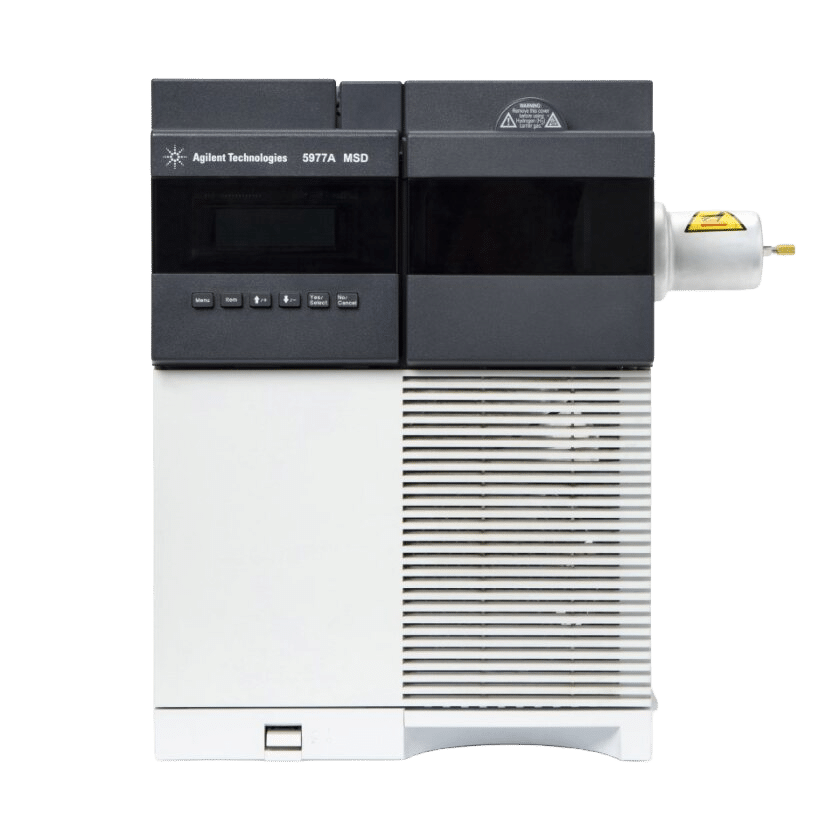
Service & Maintenance Support for Agilent 5977 GC/MSD Systems
Reliable operation of your Agilent 5977 GC/MSD system is critical for consistent mass spectral quality, reproducible sensitivity and lab throughput. ILS provides independent service, preventative maintenance and break-fix repair for Agilent 5977 single-quadrupole MSD instruments and the GC front ends they run on, along with other Agilent GC and GC/MS platforms. Our local engineers offer 48-hour response time, and we can service a wide range of instruments across your portfolio.
About the 5977 Series: High-Performance Single-Quadrupole GC/MS
The Agilent 5977 is a single-quadrupole mass selective detector (MSD) built around electron ionization, a hyperbolic quadrupole mass filter and a high-energy dynode detector, typically paired with a 7890 gas chromatograph. It offers a choice of EI sources, including stainless steel, inert and extractor designs, and is known for its sensitivity and spectral fidelity across demanding analytical workflows.
The 5977 series is commonly found in environmental, forensic, food and beverage, pharmaceutical and clinical research laboratories. Typical use cases include volatile and semi-volatile compound identification, residual solvent analysis, target quantitation and screening across regulated and research environments.
Preventative Maintenance for Agilent 5977 GC/MSD Systems
Routine preventative maintenance keeps 5977 systems stable, sensitive and compliant, especially where source contamination, vacuum problems or air leaks can disrupt reporting and regulatory timelines. A mass spectrometer places added demands on the vacuum system, ion source and tune stability. Labs can perform this work in-house, tap Agilent directly, or work with an independent service provider like ILS.
In general, maintenance for the 5977 should focus on preserving vacuum integrity and a clean ion source, maintaining tune and mass calibration stability, and proactively replacing aging filaments, consumables and pump components before they affect sensitivity, spectral quality or instrument uptime.
Basic Agilent Preventative Maintenance
Daily
Check the septum, injection port liner, and column nuts.
Weekly
Check pump oil level and inlet consumables, including O-rings and septa. Run a tune and evaluation report, and log results to track trends.
Quarterly
Replace gas cylinders when pressure drops below 500 psi. If the system runs CI with ammonia reagent gas, check that supply on the same quarterly schedule.
Every 6 months
Replace the foreline pump oil to keep the vacuum system running clean. Check the calibration vial and refill it if the level is low.
Yearly
Check diffusion pump fluid and top it off or replace it as needed. Recondition or replace internal and external traps and chemical filters to keep contamination out of the system.
As needed
Tune the MSD, clean the ion source, and replace worn filaments, the electron multiplier, the column, or the carrier gas trap as conditions call for it. Lubricate only the sideplate and vent valve O-rings and replace GC gas supplies as needed.
Common Issues Addressed During Maintenance
Vacuum & Pumping
Oil leaks, low or contaminated pump fluid, or a clogged cooling fan.
Ion Source & Sensitivity
Loss of sensitivity, worn filaments, or a multiplier nearing end of life.
Tune & Mass Calibration
Weak RFPA power, vacuum leaks, mass axis drift, or poor peak resolution.
GC Front End & Interface
Inlet leaks, worn consumables, column bleed, or ferrule debris clogging transfer lines.
Electronics & Communication
Heated-zone or thermocouple faults, power supply issues, or dropped communication.
“ILS listens. They will help you troubleshoot over the phone if you want to try and get stuff out faster, but if not, they usually will show up the next day without making you jump through a million hoops.”
Common Agilent 5977 Fault Status Troubleshooting
Agilent 5977 faults are typically reported through MassHunter acquisition software, with tune reports, vacuum status and error messages indicating source, vacuum, filament or GC front-end conditions. A not-ready or fault indicator may also signal a problem state.
Troubleshooting requires interpretation of software messages, tune reports and instrument readings by an Agilent-trained Qualified Maintenance Person or an experienced independent engineer from ILS. Common fault symptoms include loss of sensitivity, failed tunes, high air/water background, vacuum faults and GC inlet leaks.
ILS Offers Trustworthy, Affordable Third-Party Service for Agilent GC/MS Systems
Having an issue with your Agilent 5977 GC/MSD system? ILS has the answer. Our team of engineers provides preventative maintenance, troubleshooting and emergency repairs nationwide.
Our team is held to the same quality standards as OEM engineers, but we are set apart by true 48-hour response times, multi-vendor service and flexible engagement models. If you simply need your Agilent GC/MS system to deliver reliable, reproducible results with minimal downtime, ILS is your best option.
No time for downtime.

6909 Columbus Rd. SW
Granville, OH 43023
sales@innlabserv.com
(614) 858-5305
© 2019 Innovative Lab Services. All rights reserved.